Contents
The Bank of Korea’s November 20 release shows that the provisional producer price index for October 2026 fell 0.1% from September and was 7.2% higher than a year earlier. The headline did not mean every component declined: farm, forestry and fishery products fell 8.3% on the month, while manufactured goods rose 0.3%. The release is not a household-receipt measure or a forecast of the next CPI reading.
- Reference period
- October 2026 · provisional PPI
- Headline index
- Month-on-month −0.1% · year-on-year +7.2%
- Component rates
- Farm, forestry and fishery −8.3% · manufactured goods +0.3% MoM
- Fact-checked
- November 22, 2026, 09:14 KST · official materials
−0.1% and +7.2% compare different periods
The −0.1% monthly rate compares October with September 2026. The +7.2% annual rate compares October 2026 with October 2025. A measure can edge down over the latest month and remain well above its level one year earlier.
PPI excluding food and energy rose 0.1% on the month and 7.3% on the year. Its direction can differ from the headline because the covered basket and weights differ. We have not inferred any individual component’s contribution from these rates alone.
| Indicator | Month-on-month | Year-on-year | Scope |
|---|---|---|---|
| Producer price index | −0.1% | +7.2% | Producer shipment stage for domestic goods and business services |
| Excluding food and energy | +0.1% | +7.3% | A separate measure excluding two volatile groups |
| Farm, forestry and fishery products | −8.3% | — | October component monthly rate |
| Manufactured goods | +0.3% | — | October component monthly rate |
Farm-related prices fell while manufactured goods rose
Within farm, forestry and fishery products, crops fell 11.8% and livestock products fell 7.3% from September. Manufactured goods moved the other way: chemical products rose 1.5%, while coal and petroleum products rose 1.9%. A negative headline therefore does not establish that every producer cost or product price declined.
These are rates for broad groups, not percentage-point contributions to the headline. Calculating contributions requires weights, so this article does not estimate them.
PPI is not the same measure as a grocery receipt
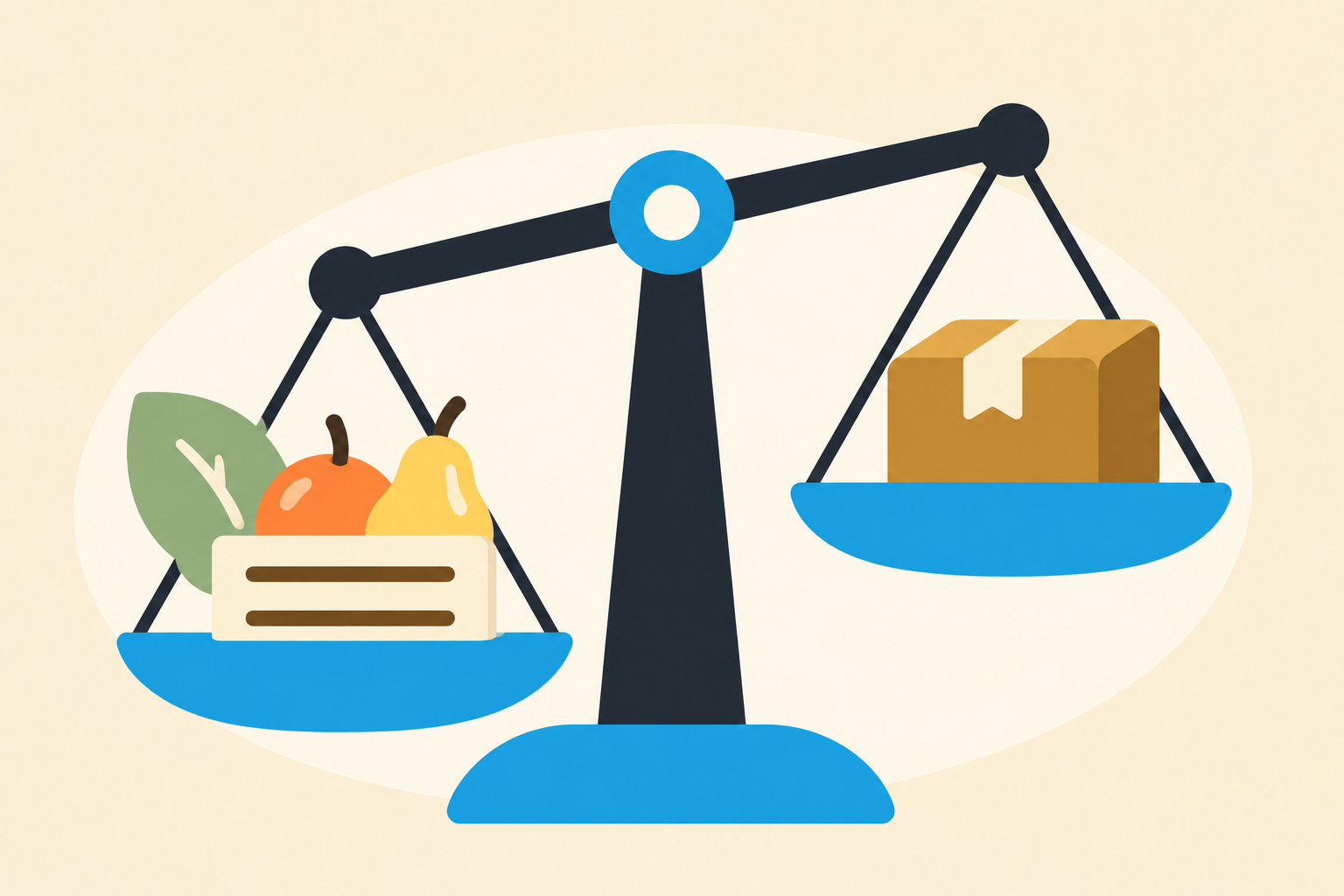
The BOK defines PPI as price changes at the first transaction stage for domestically produced goods and business services supplied to the domestic market. CPI observes prices of goods and services households actually purchase.
Because the baskets, weights and transaction stages differ, a 0.1% fall in PPI cannot be converted into a 0.1% reduction in your basket. This release alone also cannot establish how much or when producer-stage changes might reach consumer prices.
Domestic supply and total output use wider scopes
The domestic supply price index rose 0.7% on the month and 8.2% on the year. It combines producer and import prices to cover goods and services supplied domestically, so it is a separate measure.
The total output price index rose 0.3% on the month and 13.6% on the year. It includes both domestic shipments and exports. Similar names do not make these figures interchangeable with the headline PPI’s −0.1%.
Use a three-part check for household decisions
First identify whether a headline is about PPI or CPI. Then separate monthly from annual rates. Finally distinguish the aggregate index from component groups. Those checks prevent one number from being treated as a change in every price.
For a household budget, compare the same pack size under the same purchase conditions on your own receipts. This provisional release is not evidence to stockpile a product or reduce next month’s budget.
October’s readings are provisional
The BOK published the release on November 20 for the reference month of October. The release labels the PPI provisional, so later finalization can revise values.
We cross-checked the BOK release page and calendar, the KDI policy-material summary of the BOK release, and the BOK price-index explainer at 09:14 KST on November 22, 2026. No unreleased values, market reaction, causal pass-through claim or CPI forecast has been added.
Frequently asked questions
Does a 0.1% PPI fall mean my grocery bill fell 0.1%?
No. PPI and CPI cover different baskets, weights and transaction stages. A PPI monthly rate cannot be converted into the change on an individual receipt.
Is the 8.3% fall for farm-related products their contribution to the headline?
No. It is the group’s own monthly rate. A contribution calculation needs weights, and this article does not estimate one.
Summary
Korea’s provisional October 2026 PPI fell 0.1% month-on-month, but farm, forestry and fishery products fell 8.3% while manufactured goods rose 0.3%. Do not convert a producer-stage measure into an individual grocery bill or CPI forecast.